 EN
EN  BN
BN 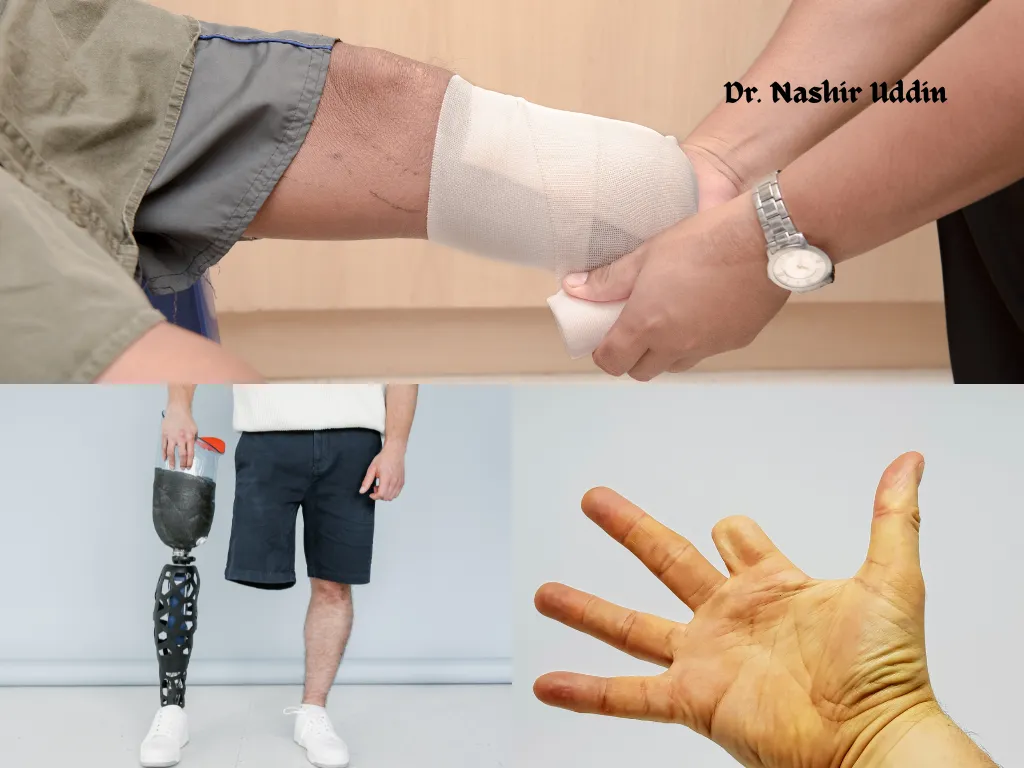
Preventing amputation is one of the most important goals in advanced wound and diabetic foot care. Severe infections, diabetic ulcers, poor blood circulation, trauma, or gangrene can increase the risk of losing a finger, foot, or limb if not treated properly. Early diagnosis, proper wound care, infection control, and reconstructive treatment can often help save the affected limb. Professor Dr. Mohammad Nashir Uddin provides specialized care focused on limb preservation and functional recovery.
Frequently Asked Questions (Q&A)
Q1: Why do some patients become at risk for amputation?
Conditions such as diabetes, severe infection, gangrene, poor blood circulation, or serious injuries can damage tissues and increase the risk of amputation.
Q2: Can amputation always be prevented?
Not in every case, but early treatment greatly improves the chances of saving the affected limb or body part.
Q3: What treatments help prevent amputation?
Treatment may include infection control, advanced wound care, removal of dead tissue, improving blood supply, reconstructive surgery, and regular monitoring.
Q4: Why is early specialist care important?
Delaying treatment may allow the infection or tissue damage to worsen, making limb preservation more difficult.
Preventing amputation requires timely diagnosis, proper wound management, and expert medical care. With advanced treatment techniques and close monitoring, many patients can avoid major complications and preserve limb function and quality of life.
If you or your loved one has a diabetic foot ulcer, severe infection, gangrene, or a non-healing wound, seek specialist consultation immediately. Early treatment can play a vital role in preventing amputation and improving recovery outcomes.
To schedule an appointment with Professor Dr. Mohammad Nashir Uddin, please contact: 01320-909336